Contact Us for a Free Case Evaluation
"*" indicates required fields

An underride crash is one of the most dangerous accidents that can happen on the road. A passenger vehicle slides beneath the body of a tractor-trailer, and the crushing force of the truck causes catastrophic injuries to the people inside the car.
If you were hurt, or lost a loved one, in one of these wrecks around Appleton, an experienced underride truck accident lawyer can help you understand what went wrong and what your options are under Wisconsin law.
At Brian Hodgkiss Injury Lawyers, we handle truck accident cases with the careful attention they demand. Contact us today to schedule a free consultation.
What Is an Underride Truck Accident?
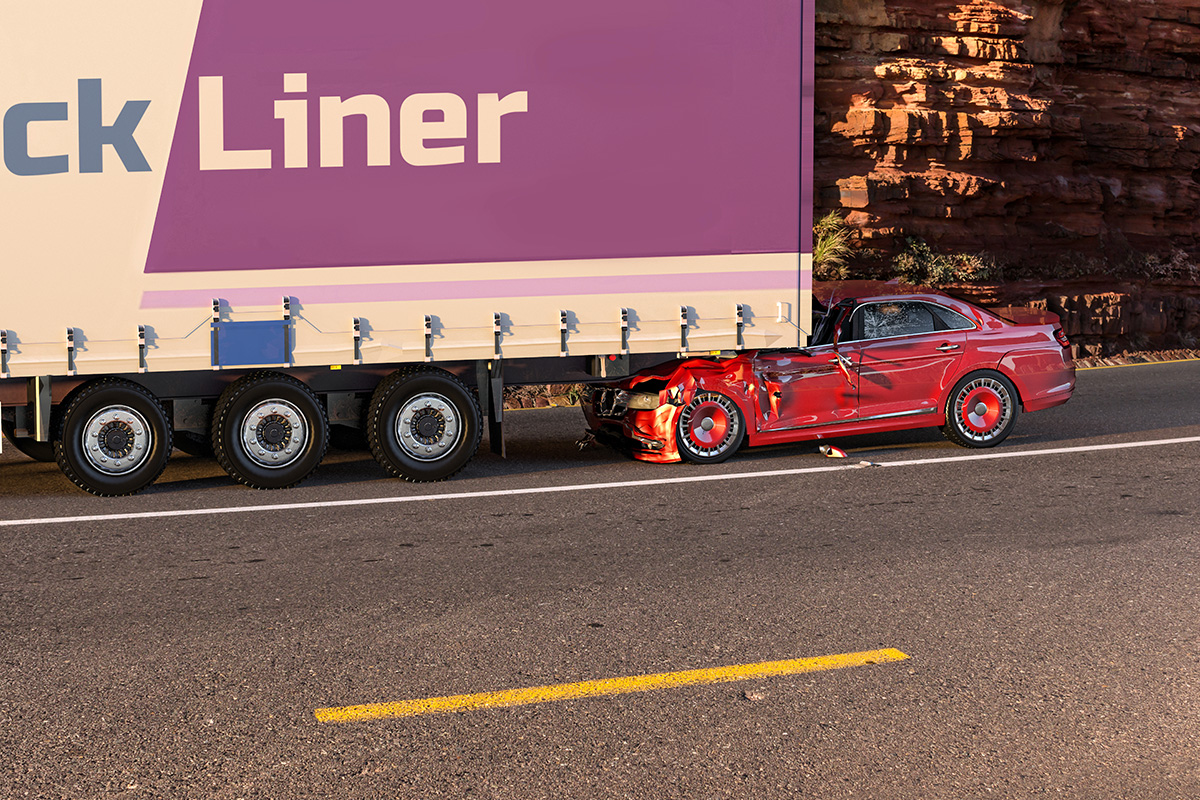
An underride accident happens when a smaller vehicle slides under the trailer of a large truck. It can occur at the rear, when a car ends up beneath a truck that stopped suddenly, or at the side, when a truck turns across a lane. Because the bottom of a trailer sits well above the hood of most cars, the truck can shear straight into the passenger compartment.
That is what makes these crashes uniquely traumatic. In a typical rear-end collision, the bumper, crumple zones, and airbags absorb much of the force. In an underride, those protections never get the chance to work. The trailer passes over them and strikes the windshield, the roof, and the people inside.
An underride is not the same as an override, which is the reverse situation, where the truck rides up and over the smaller vehicle. Both come from the large height gap between a car and a trailer, and both tend to leave the people in the smaller vehicle with catastrophic, often fatal injuries.
What Causes Underride Truck Accidents?
Most underride crashes trace back to something a truck driver or trucking company did or failed to do. Insurers like to argue that the driver of the smaller car was following too closely, but that is far from the whole story.
Factors that can lead to an underride wreck include:
- Missing or Damaged Underride Guards: A trailer with no working rear guard, or one that has been bent or corroded, offers nothing to stop a car from sliding underneath.
- Sudden, Unjustified Braking: When a truck stops hard without cause, drivers behind it may have no room to react before sliding under the trailer.
- Wide or Unsignaled Turns: A truck turning across traffic can leave its long trailer stretched across a lane, creating a side underride hazard that is hard to see at night.
- Poor Trailer Visibility: Faded reflective tape, broken lights, or a dirty trailer can make a stopped or slow-moving truck nearly invisible until it is too late.
- Fatigue and Distraction: A tired or distracted trucker may stop short, drift, or turn without checking, any of which can put a smaller vehicle underneath the trailer.
Northeast Wisconsin sees heavy commercial truck traffic, especially along I-41 and US-41 through the Fox Cities and on the WI-441 spur around Appleton. Rural routes like WI-29 add their own risks, where narrower, darker roads can leave little margin when a truck slows or turns.
If you were hit on one of these corridors, our Appleton truck accident attorneys can look at how the crash happened and help you determine who is responsible.
Underride Guards and Federal Truck Safety Rules
Federal law requires most large trailers to carry a rear impact guard, often called an underride guard. This is the steel bar you see hanging below the back of a trailer, and its job is to stop a car from sliding underneath in a rear-end collision.
Under federal regulation 49 CFR 393.86, trailers and semitrailers with a gross vehicle weight rating of 10,000 pounds or more, built on or after January 26, 1998, must have a rear impact guard meeting Federal Motor Vehicle Safety Standard No. 223 and 224.
Trucking companies must also keep those guards in safe condition through regular inspection. A guard that is missing, badly damaged, or out of compliance can be strong evidence that the company failed to meet its safety obligations.
That is why the moments after a crash matter. If you or someone with you is able, photograph the back and sides of the trailer, including the guard.
Pictures of a missing or mangled guard can become some of the most important evidence in your case. If you could not document the scene, a lawyer can request the carrier’s maintenance and inspection records to learn the condition of the truck.
Common Injuries in Underride Crashes
Because the trailer strikes the upper part of the vehicle, underride crashes tend to cause injuries to the head, neck, and chest. Survivors often face long recoveries and permanent changes to their lives.
Common injuries include:
- Traumatic Brain Injuries: From the force of the trailer striking the windshield and roof area
- Spinal Cord Injuries and Paralysis: Damage that can permanently affect movement and sensation
- Severe Head, Face, and Neck Trauma: Including fractures and disfigurement
- Internal Injuries and Internal Bleeding: From the crushing forces involved
- Broken Bones: Throughout the body, sometimes requiring multiple surgeries
- Amputation or Permanent Disfigurement: In the most severe collisions
Tragically, many underride crashes are fatal. Survivors are often transported to regional trauma centers in the Fox Cities for emergency care.
The cost of treating a catastrophic injury like this can climb into the hundreds of thousands of dollars, another reason why getting the full picture of your losses matters so much.
Who Is Liable in an Underride Truck Accident?
More than one party can share responsibility for an underride crash. Sorting out who is at fault is one of the most important parts of building your case.
Depending on what the evidence shows, the liable parties may include:
- The Truck Driver: If they braked without cause, turned carelessly, or drove while fatigued or distracted
- The Trucking or Motor Carrier Company: If it pushed unrealistic schedules, skipped maintenance, or put an unsafe trailer on the road
- A Cargo Loader: If poorly loaded or shifting freight contributed to the crash
- A Maintenance Contractor: If it failed to keep the underride guard or other safety equipment in compliant condition
Wisconsin follows a modified comparative negligence rule. You can still recover compensation as long as you are not more than 50% at fault for the crash, but your recovery is reduced by your share of the blame. If a jury finds you 20% responsible, for example, your award is reduced by 20%.
This is exactly why trucking insurers work so hard to pin blame on the driver of the smaller vehicle, often claiming you were tailgating. Evidence about the trailer’s guard, the truck’s maintenance history, and the driver’s conduct can push back against that tactic and protect your right to recover.
Your Legal Rights and Deadlines Under Wisconsin Law
If someone else’s negligence caused your underride crash, Wisconsin law lets you seek compensation for what the wreck has cost you. That can include medical bills, future care and rehabilitation, lost income, reduced earning ability, and the pain and emotional toll of your injuries.
Under Wisconsin law, you generally have three years from the date of injury to file a personal injury lawsuit in Wisconsin. Waiting can cost you more than the deadline itself, because evidence like truck maintenance records, driver logs, and the trailer’s condition can disappear over time.
When an underride crash takes a life, the family may have a wrongful death claim. Wisconsin caps certain loss-of-society and companionship damages in these cases, so a flat promise of unlimited recovery in a fatal case does not reflect Wisconsin law.
The filing deadline for a wrongful death claim from a motor vehicle crash can also differ from the general three-year window, so it is worth talking with a lawyer about your situation as early as you can.
Frequently Asked Questions
What Is an Underride Truck Accident?
An underride truck accident is a crash where a smaller vehicle slides underneath the trailer of a large truck. These wrecks are especially dangerous because the trailer can strike the windshield and roof directly, bypassing the car’s bumper, crumple zones, and airbags.
What Causes Most Underride Truck Crashes?
Most underride crashes involve a truck driver or trucking company failing to act safely. Common causes include missing or damaged underride guards, sudden braking, wide or unsignaled turns, poor trailer visibility, and fatigued or distracted driving.
Who Can Be Held Liable After an Underride Accident in Wisconsin?
Liability can fall on the truck driver, the trucking company, a cargo loader, or a maintenance contractor, depending on what caused the crash. More than one party can share responsibility, and identifying each one is key to recovering the full value of your claim.
How Long Do I Have to File an Underride Truck Accident Claim in Wisconsin?
You generally have three years from the date of injury to file a personal injury lawsuit in Wisconsin. Deadlines for a wrongful death claim can differ, so it is best to speak with a lawyer early to protect your rights.
What Injuries Are Common in Underride Crashes?
Underride crashes often cause traumatic brain injuries, spinal cord injuries, severe head and neck trauma, internal injuries, and broken bones. Because the trailer strikes the upper part of the vehicle, these injuries tend to be serious and sometimes fatal.
What Should I Do Right After an Underride Truck Accident Near Appleton?
Get medical attention right away and call the police so there is an official record. If you can do so safely, photograph the truck and its underride guard, get contact information for witnesses, and avoid giving a recorded statement to the trucking company’s insurer before talking to a lawyer.
How Much Does It Cost to Hire Brian Hodgkiss Injury Lawyers for an Underride Case?
We handle injury cases on a contingency basis under our No Fee Guarantee®, which means you pay no attorney fee unless we recover compensation for you. Your initial consultation is free.
Talk to an Appleton Truck Accident Lawyer Today
An underride crash can change everything in a few seconds, and the trucking company’s insurer is already working to limit what it pays. You do not have to face that alone. Brian and our team can listen to what happened, explain where you stand, and deal with the truck company so you can focus on healing.
Contact the truck accident lawyers at Brian Hodgkiss Injury Lawyers for a free consultation. With our No Fee Guarantee®, you pay no attorney fee unless we recover for you.
Contact Us for a Free Case Evaluation
"*" indicates required fields
Appleton Underride Truck Accident Lawyer
An underride crash is one of the most dangerous accidents that can happen on the road. A passenger vehicle slides beneath the body of a tractor-trailer, and the crushing force of the truck causes catastrophic injuries to the people inside the car.
If you were hurt, or lost a loved one, in one of these wrecks around Appleton, an experienced underride truck accident lawyer can help you understand what went wrong and what your options are under Wisconsin law.
At Brian Hodgkiss Injury Lawyers, we handle truck accident cases with the careful attention they demand. Contact us today to schedule a free consultation.
What Is an Underride Truck Accident?
An underride accident happens when a smaller vehicle slides under the trailer of a large truck. It can occur at the rear, when a car ends up beneath a truck that stopped suddenly, or at the side, when a truck turns across a lane. Because the bottom of a trailer sits well above the hood of most cars, the truck can shear straight into the passenger compartment.
That is what makes these crashes uniquely traumatic. In a typical rear-end collision, the bumper, crumple zones, and airbags absorb much of the force. In an underride, those protections never get the chance to work. The trailer passes over them and strikes the windshield, the roof, and the people inside.
An underride is not the same as an override, which is the reverse situation, where the truck rides up and over the smaller vehicle. Both come from the large height gap between a car and a trailer, and both tend to leave the people in the smaller vehicle with catastrophic, often fatal injuries.
What Causes Underride Truck Accidents?
Most underride crashes trace back to something a truck driver or trucking company did or failed to do. Insurers like to argue that the driver of the smaller car was following too closely, but that is far from the whole story.
Factors that can lead to an underride wreck include:
- Missing or Damaged Underride Guards: A trailer with no working rear guard, or one that has been bent or corroded, offers nothing to stop a car from sliding underneath.
- Sudden, Unjustified Braking: When a truck stops hard without cause, drivers behind it may have no room to react before sliding under the trailer.
- Wide or Unsignaled Turns: A truck turning across traffic can leave its long trailer stretched across a lane, creating a side underride hazard that is hard to see at night.
- Poor Trailer Visibility: Faded reflective tape, broken lights, or a dirty trailer can make a stopped or slow-moving truck nearly invisible until it is too late.
- Fatigue and Distraction: A tired or distracted trucker may stop short, drift, or turn without checking, any of which can put a smaller vehicle underneath the trailer.
Northeast Wisconsin sees heavy commercial truck traffic, especially along I-41 and US-41 through the Fox Cities and on the WI-441 spur around Appleton. Rural routes like WI-29 add their own risks, where narrower, darker roads can leave little margin when a truck slows or turns.
If you were hit on one of these corridors, our Appleton truck accident attorneys can look at how the crash happened and help you determine who is responsible.
Underride Guards and Federal Truck Safety Rules
Federal law requires most large trailers to carry a rear impact guard, often called an underride guard. This is the steel bar you see hanging below the back of a trailer, and its job is to stop a car from sliding underneath in a rear-end collision.
Under federal regulation 49 CFR 393.86, trailers and semitrailers with a gross vehicle weight rating of 10,000 pounds or more, built on or after January 26, 1998, must have a rear impact guard meeting Federal Motor Vehicle Safety Standard No. 223 and 224.
Trucking companies must also keep those guards in safe condition through regular inspection. A guard that is missing, badly damaged, or out of compliance can be strong evidence that the company failed to meet its safety obligations.
That is why the moments after a crash matter. If you or someone with you is able, photograph the back and sides of the trailer, including the guard.
Pictures of a missing or mangled guard can become some of the most important evidence in your case. If you could not document the scene, a lawyer can request the carrier’s maintenance and inspection records to learn the condition of the truck.
Common Injuries in Underride Crashes
Because the trailer strikes the upper part of the vehicle, underride crashes tend to cause injuries to the head, neck, and chest. Survivors often face long recoveries and permanent changes to their lives.
Common injuries include:
- Traumatic Brain Injuries: From the force of the trailer striking the windshield and roof area
- Spinal Cord Injuries and Paralysis: Damage that can permanently affect movement and sensation
- Severe Head, Face, and Neck Trauma: Including fractures and disfigurement
- Internal Injuries and Internal Bleeding: From the crushing forces involved
- Broken Bones: Throughout the body, sometimes requiring multiple surgeries
- Amputation or Permanent Disfigurement: In the most severe collisions
Tragically, many underride crashes are fatal. Survivors are often transported to regional trauma centers in the Fox Cities for emergency care.
The cost of treating a catastrophic injury like this can climb into the hundreds of thousands of dollars, another reason why getting the full picture of your losses matters so much.
Who Is Liable in an Underride Truck Accident?
More than one party can share responsibility for an underride crash. Sorting out who is at fault is one of the most important parts of building your case.
Depending on what the evidence shows, the liable parties may include:
- The Truck Driver: If they braked without cause, turned carelessly, or drove while fatigued or distracted
- The Trucking or Motor Carrier Company: If it pushed unrealistic schedules, skipped maintenance, or put an unsafe trailer on the road
- A Cargo Loader: If poorly loaded or shifting freight contributed to the crash
- A Maintenance Contractor: If it failed to keep the underride guard or other safety equipment in compliant condition
Wisconsin follows a modified comparative negligence rule. You can still recover compensation as long as you are not more than 50% at fault for the crash, but your recovery is reduced by your share of the blame. If a jury finds you 20% responsible, for example, your award is reduced by 20%.
This is exactly why trucking insurers work so hard to pin blame on the driver of the smaller vehicle, often claiming you were tailgating. Evidence about the trailer’s guard, the truck’s maintenance history, and the driver’s conduct can push back against that tactic and protect your right to recover.
Your Legal Rights and Deadlines Under Wisconsin Law
If someone else’s negligence caused your underride crash, Wisconsin law lets you seek compensation for what the wreck has cost you. That can include medical bills, future care and rehabilitation, lost income, reduced earning ability, and the pain and emotional toll of your injuries.
Under Wisconsin law, you generally have three years from the date of injury to file a personal injury lawsuit in Wisconsin. Waiting can cost you more than the deadline itself, because evidence like truck maintenance records, driver logs, and the trailer’s condition can disappear over time.
When an underride crash takes a life, the family may have a wrongful death claim. Wisconsin caps certain loss-of-society and companionship damages in these cases, so a flat promise of unlimited recovery in a fatal case does not reflect Wisconsin law.
The filing deadline for a wrongful death claim from a motor vehicle crash can also differ from the general three-year window, so it is worth talking with a lawyer about your situation as early as you can.
Frequently Asked Questions
What Is an Underride Truck Accident?
An underride truck accident is a crash where a smaller vehicle slides underneath the trailer of a large truck. These wrecks are especially dangerous because the trailer can strike the windshield and roof directly, bypassing the car’s bumper, crumple zones, and airbags.
What Causes Most Underride Truck Crashes?
Most underride crashes involve a truck driver or trucking company failing to act safely. Common causes include missing or damaged underride guards, sudden braking, wide or unsignaled turns, poor trailer visibility, and fatigued or distracted driving.
Who Can Be Held Liable After an Underride Accident in Wisconsin?
Liability can fall on the truck driver, the trucking company, a cargo loader, or a maintenance contractor, depending on what caused the crash. More than one party can share responsibility, and identifying each one is key to recovering the full value of your claim.
How Long Do I Have to File an Underride Truck Accident Claim in Wisconsin?
You generally have three years from the date of injury to file a personal injury lawsuit in Wisconsin. Deadlines for a wrongful death claim can differ, so it is best to speak with a lawyer early to protect your rights.
What Injuries Are Common in Underride Crashes?
Underride crashes often cause traumatic brain injuries, spinal cord injuries, severe head and neck trauma, internal injuries, and broken bones. Because the trailer strikes the upper part of the vehicle, these injuries tend to be serious and sometimes fatal.
What Should I Do Right After an Underride Truck Accident Near Appleton?
Get medical attention right away and call the police so there is an official record. If you can do so safely, photograph the truck and its underride guard, get contact information for witnesses, and avoid giving a recorded statement to the trucking company’s insurer before talking to a lawyer.
How Much Does It Cost to Hire Brian Hodgkiss Injury Lawyers for an Underride Case?
We handle injury cases on a contingency basis under our No Fee Guarantee®, which means you pay no attorney fee unless we recover compensation for you. Your initial consultation is free.
Talk to an Appleton Truck Accident Lawyer Today
An underride crash can change everything in a few seconds, and the trucking company’s insurer is already working to limit what it pays. You do not have to face that alone. Brian and our team can listen to what happened, explain where you stand, and deal with the truck company so you can focus on healing.
Contact the truck accident lawyers at Brian Hodgkiss Injury Lawyers for a free consultation. With our No Fee Guarantee®, you pay no attorney fee unless we recover for you.
